Blog & News
Fake online shops: how to check a website before you buy
PharWeb
Hits: 2
4 minutes read
A promotion seen on social media, a link received by text message, an unknown shop showing a product you cannot find anywhere else… An online shop you do not know may be perfectly honest, or may exist only to take payments without ever delivering. A few simple checks help you tell the difference before you take out your bank card. Here are the habits recommended by the French authorities, and a tool to save time: SiteFiable.
Warning signs
- An offer too good to be true: prices far below the market often hide a scam. Read the description, do not rely on the photo alone.
- A web address that does not fit: a domain name unrelated to the products sold, or one that imitates a well-known brand. Type a retailer's address yourself rather than clicking a link: some fake sites faithfully copy the originals.
- Clumsy wording: spelling mistakes, machine translations, generic or incomplete terms of sale.
- Only glowing reviews: fake reviews exist, positive and negative alike, and publishing them is illegal in France.
- A link received by text message or email: a parcel waiting, a refund, an exclusive promotion… the classic entry point for phishing.
Checks to make before ordering
1. The legal notice and terms of sale
They are mandatory. They must state the seller's name or company name, address and contact details. For a French company, you can then look up its name or its SIREN/SIRET number on the Annuaire des Entreprises, the French public service that gathers companies' legal information.
2. The website's reputation
Search for the site's name together with the word "scam" and read feedback from other buyers, on sites other than the shop itself.
3. The address and age of the website
A postal address that cannot be found, or that has nothing to do with a commercial activity, is a bad sign. The creation date of the domain name can be checked with a WHOIS service (or with AFNIC for .fr addresses): a site created a few weeks earlier calls for extra caution.
4. Payment
The address must start with https:// and show a padlock, but this alone is not enough: fake sites often have one too. Use the strong authentication offered by your bank, do not save your card on the site and refuse to let the browser store it.
5. The seller's country
A French or European seller gives you more rights, such as the right of withdrawal, and better remedies in the event of a dispute.
Saving time with SiteFiable
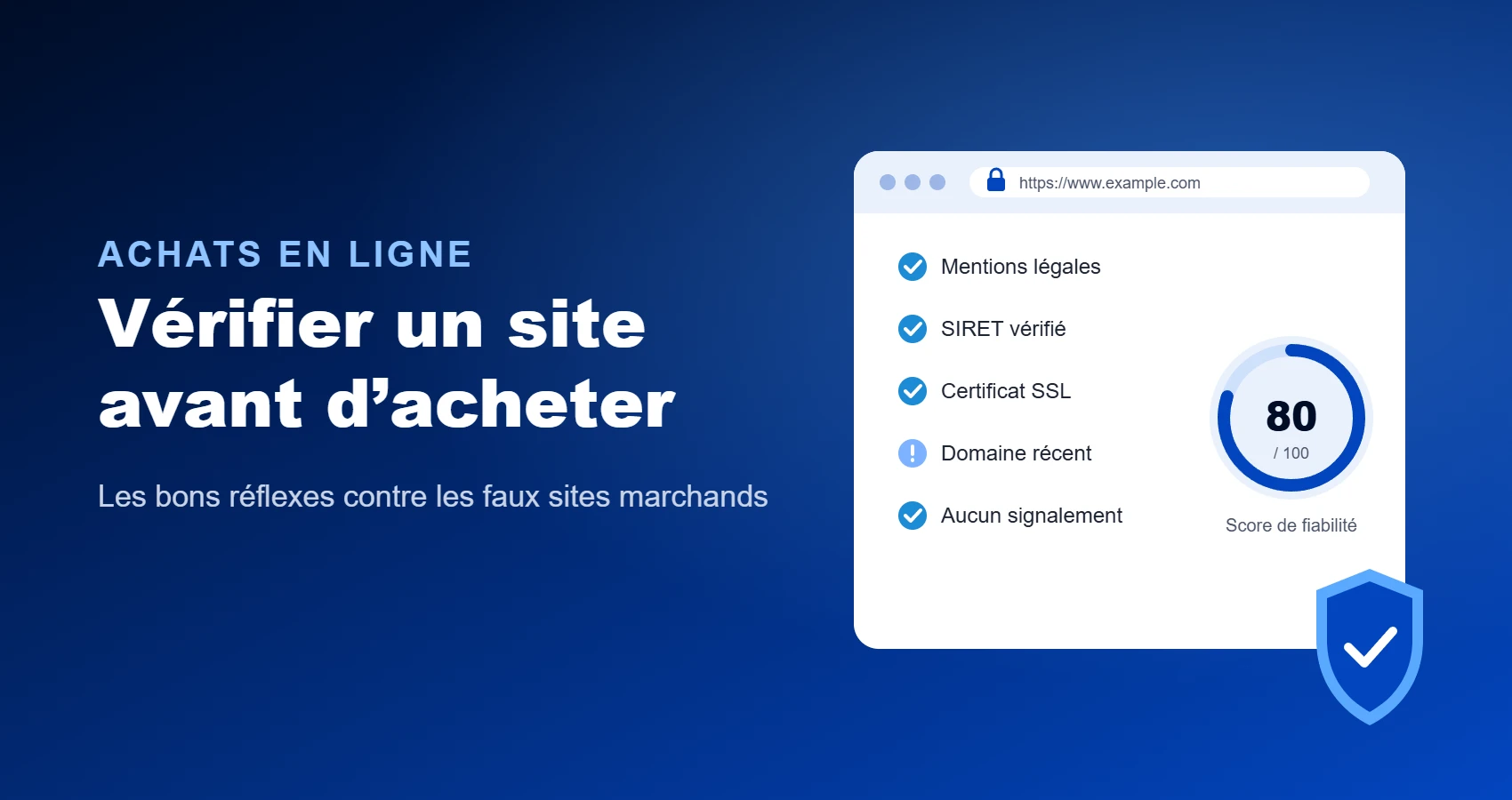
Doing all these checks by hand takes time. SiteFiable, an online tool published by PharWeb, automates a large part of them: you paste the site's address, and it cross-checks more than 30 public sources in about a minute.
- Legal identity: SIRET and INSEE, INPI, BODACC, European VAT number (VIES), company officers.
- Legal notice: presence of the mandatory information.
- Reports: Signal Conso, fraud blacklists, the AMF blacklist.
- Technical security: WHOIS, certificate and DNSSEC, email DNS configuration, VirusTotal.
- History: site archives (Wayback Machine) and certificate history.
The result is a score out of 100, with the positive points, the alerts and links to each source so you can check for yourself. The score takes the type of site into account: a personal blog is not penalised for having no SIRET. The calculation is entirely automatic: nobody intervenes in the results.
SiteFiable offers 3 checks a day without signing up, and paid plans beyond that. It is a decision-making aid: it replaces neither your vigilance nor a legal check.
Check a website on sitefiable.fr
What if it is too late?
- Contact your bank immediately to dispute any transaction you did not authorise.
- Report the website on SignalConso.
- Get support from a consumer association, or from Cybermalveillance.gouv.fr, the French national victim-support service.
Are you a business?
Your customers make these same checks on your website. A complete legal notice, an up-to-date certificate and a well-maintained site reassure them before the first contact. PharWeb supports businesses with website maintenance and IT security. Contact us to talk it through.
Sources (in French unless stated)
- economie.gouv.fr (DGCCRF) – Acheter en ligne en toute sécurité
- Institut national de la consommation – Achats en ligne : nos conseils pour sécuriser vos achats
- DREETS – L’Annuaire des Entreprises : toutes les informations légales sur un même site
- European Consumer Centre France – How to check if a website selling goods is trustworthy (English)